Ifá: The Sacred Practice and Complete Educational System of the Yorùbá People
Ifá demanded more of its specialists than any oral tradition in human history.
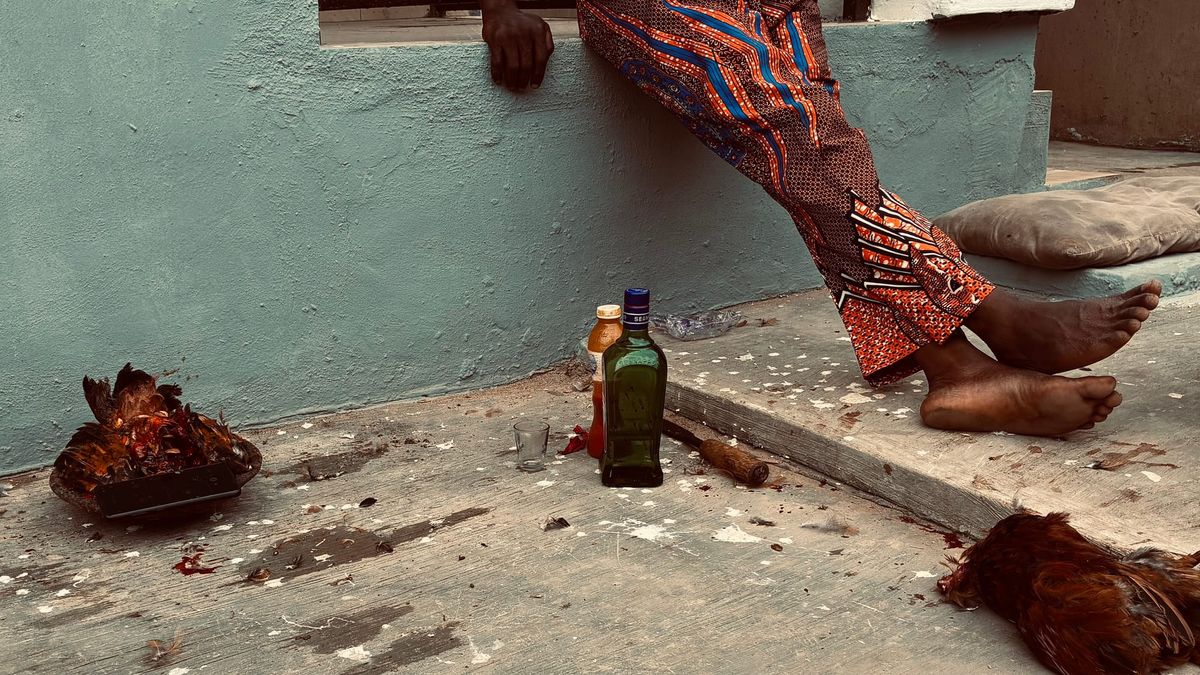
Ifá is simultaneously the sacred practice and the complete educational system of the Yorùbá people.
ẹsẹ Ifá does not merely prescribe ritual; it carries within it history, geography, theology, medicine, music, and philosophy. Rooted in a civilisation whose cultural origins archaeological evidence traces to at least 1500 BCE, through the Nok terracotta tradition and Ilé-Ifẹ̀.
Ifá predates the Homeric epics of ancient Greece by more than seven centuries and stands as a contemporary of the earliest Vedic compositions of the Indian subcontinent. Both of those traditions are rightly honoured as pinnacles of human intellectual achievement. But neither produced anything comparable to what Ifá demanded of its specialists.
The Greek rhapsodes who memorised Homer's 27,000 lines recited a fixed text in sequence and when oral transmission proved insufficient to preserve it unchanged, the Greeks wrote it down.
The Brahmin priests who mastered the Vedic recitation tradition committed sacred texts to memory with extraordinary phonetic precision for predetermined ceremonial contexts and when oral transmission alone seemed fragile, Sanskrit manuscripts were produced alongside the oral stream.
Both civilisations, when the cognitive burden became too great, reached for writing as a solution.
The Babaláwo tradition admitted no such provision. Codified into 256 chapters each containing scores of individual poems totalling a corpus that dwarfs the Homeric texts by any measure, Ifá was transmitted exclusively through human memory across generations with no written backup.
At the pinnacle of this tradition stand those Babaláwo and in certain lineages, Ìyánífá, who demonstrated the extraordinary intellectual capacity to master the full corpus. They were not merely learned practitioners. They were among the most cognitively accomplished human beings any civilisation has ever produced.